PROBLEM SOLVING
INTRODUCTION:

PROBLEM SOLVING
In every aspect of life, from personal to professional endeavors, we encounter challenges and obstacles that require solutions. Problem-solving is the process of identifying, analyzing, and resolving these challenges effectively and efficiently. It is a fundamental skill that empowers individuals to overcome obstacles, make informed decisions, and achieve their goals. In this introduction, we'll explore the importance of problem-solving, its key components, and its relevance in various contexts.
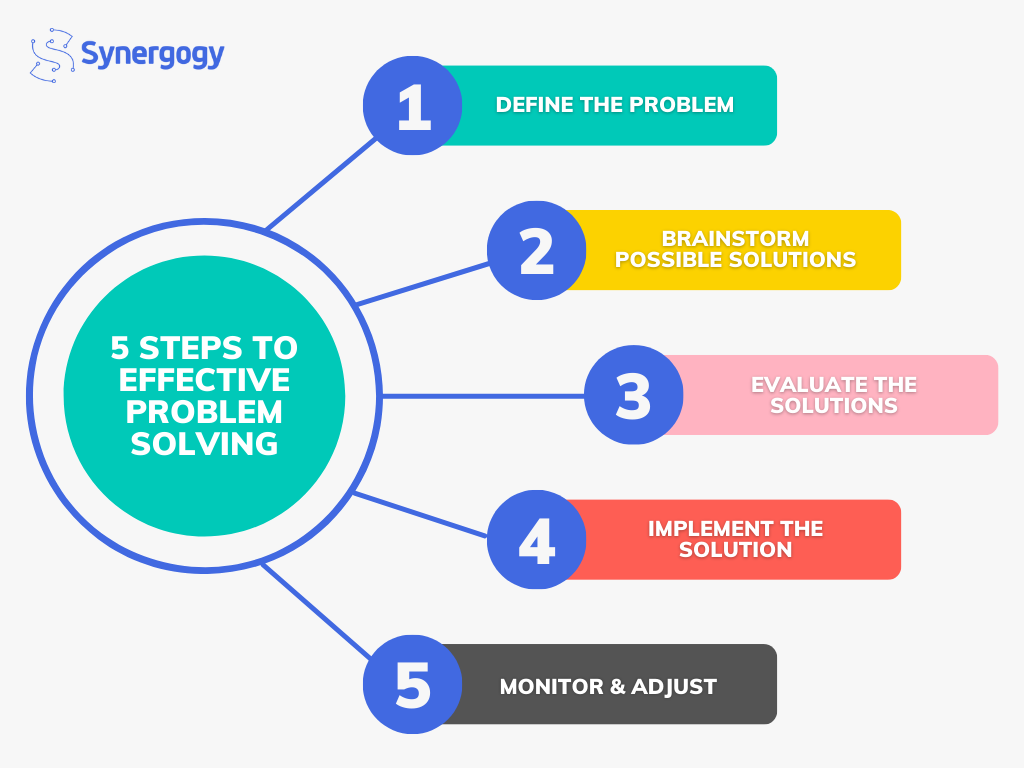
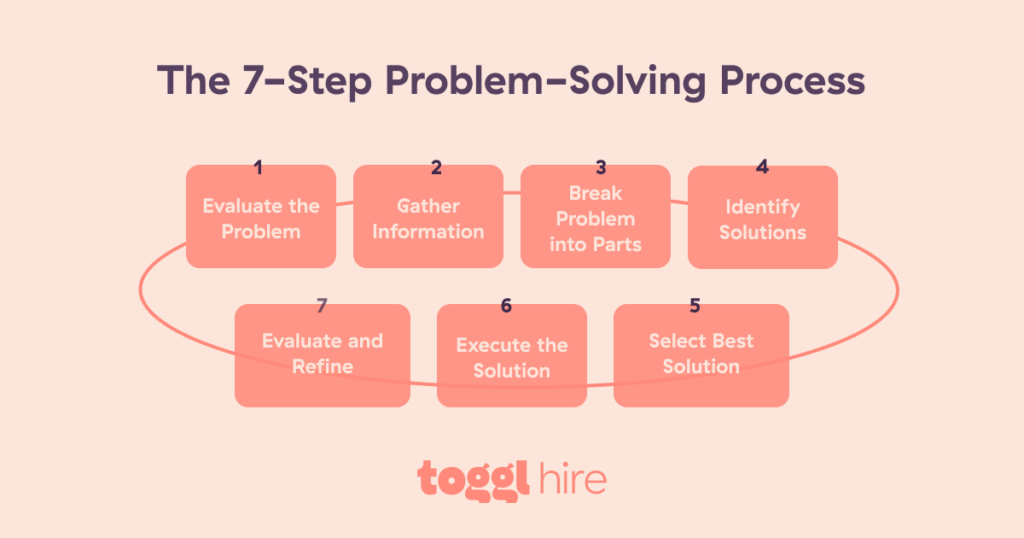
- Problem-solving is a dynamic and iterative process that involves several key steps. It begins with identifying and defining the problem, followed by analyzing its underlying causes and potential solutions. Next, individuals evaluate the available options, make decisions based on their analysis, and implement the chosen solution. Finally, they assess the effectiveness of their solution and make adjustments as needed.
- The ability to solve problems is essential in both personal and professional contexts. In daily life, individuals encounter a wide range of problems, from minor inconveniences to major challenges, such as financial difficulties, relationship conflicts, or health concerns. Effective problem-solving enables individuals to navigate these challenges with confidence and resilience, leading to better outcomes and increased satisfaction.
In the workplace, problem-solving skills are highly valued by employers and are essential for success in virtually every industry and role. Employees who excel at problem-solving are able to identify opportunities for improvement, overcome obstacles, and drive innovation and growth within their organizations. They demonstrate adaptability, creativity, and analytical thinking, making them valuable assets to their teams and organizations.
The components of effective problem-solving include:
- Identification of the Problem: Clearly defining the problem and understanding its scope, impact, and underlying causes.
- Analysis and Evaluation: Gathering relevant information, analyzing data, and evaluating potential solutions based on their feasibility, effectiveness, and impact.
- Decision Making: Making informed decisions based on the analysis of available options, considering potential risks and benefits.
- Implementation: Taking action to implement the chosen solution, including planning, execution, and monitoring progress.
- Evaluation and Adjustment: Assessing the effectiveness of the solution, identifying lessons learned, and making adjustments as needed to achieve desired outcomes.
Types of Problems:
Problems can vary in complexity and nature. They may be well-defined, with clear objectives and solutions, or ill-defined, requiring more exploration and creativity. Problems can also be classified as routine, recurring issues that have established solutions, or novel, unique challenges that require innovative approaches.
- Problem-Solving Strategies: There are various strategies and approaches to problem-solving, including:
- Algorithmic Problem-Solving: Following a step-by-step procedure or algorithm to arrive at a solution. This approach is effective for well-defined problems with known solutions.
- Heuristic Problem-Solving: Using rules of thumb, trial and error, or intuition to generate potential solutions. Heuristics are useful for navigating complex or uncertain situations where there is no guaranteed solution.
- Analytical Problem-Solving: Breaking down a problem into its component parts, analyzing relationships and dependencies, and identifying patterns or trends. This approach is effective for understanding the underlying causes of problems and generating insights for solutions.
- Collaborative Problem-Solving: Working with others to brainstorm ideas, share perspectives, and leverage collective expertise and resources. Collaboration can lead to more innovative and effective solutions by drawing on diverse perspectives and strengths.
- Obstacles to Problem-Solving: Despite the importance of problem-solving skills, individuals may encounter various obstacles that hinder their ability to effectively solve problems. Common obstacles include:
- Lack of Information: Insufficient or inaccurate information can impede the problem-solving process by preventing individuals from fully understanding the problem or evaluating potential solutions.
- Cognitive Biases: Cognitive biases, such as confirmation bias, anchoring bias, and availability bias, can distort judgment and decision-making, leading individuals to overlook relevant information or make irrational choices.
- Emotional Factors: Emotions such as stress, fear, or frustration can cloud judgment and impede rational thinking, making it difficult to approach problems objectively and generate effective solutions.
- Fixed Mindset: A fixed mindset, characterized by the belief that abilities and intelligence are fixed traits, can limit individuals' willingness to take risks, explore new approaches, and persevere in the face of challenges.
- Developing Problem-Solving Skills: Problem-solving skills can be developed and refined through practice and deliberate effort. Some strategies for developing problem-solving skills include:
- Practice: Regularly engaging in problem-solving activities, such as puzzles, brainteasers, or real-world challenges, can help individuals build confidence and proficiency in problem-solving.
- Reflection: Reflecting on past problem-solving experiences, analyzing what worked well and what could be improved, and identifying lessons learned can enhance problem-solving abilities over time.
- Continuous Learning: Seeking out opportunities for learning and skill development, such as workshops, courses, or mentorship programs, can expose individuals to new problem-solving techniques and perspectives.
- Feedback: Soliciting feedback from others, such as peers, mentors, or supervisors, can provide valuable insights and perspectives that help individuals identify blind spots and areas for growth in their problem-solving approach.
By understanding the nature of problems, employing effective problem-solving strategies, overcoming obstacles, and continuously developing their problem-solving skills, individuals can enhance their ability to navigate challenges, make informed decisions, and achieve their goals effectively.
Problem-solving is a crucial skill for several reasons:
- Everyday Challenges: In our daily lives, we encounter a multitude of challenges, both big and small. From figuring out the fastest route to work to resolving conflicts with friends or family, problem-solving skills help us navigate these situations effectively.
- Professional Success: In the workplace, problem-solving abilities are highly valued by employers. Whether it's troubleshooting technical issues, devising strategies to meet business objectives, or resolving conflicts among team members, individuals who excel at problem-solving are more likely to succeed in their careers.
- Innovation and Creativity: Problem-solving is at the heart of innovation and creativity. By identifying problems and generating novel solutions, individuals and organizations can develop new products, services, and processes that drive progress and growth.
- Critical Thinking: Problem-solving promotes critical thinking by encouraging individuals to analyze situations, evaluate evidence, consider alternatives, and make reasoned decisions. This analytical mindset is essential for making informed choices and avoiding rash or impulsive actions.

- Personal Development: Developing problem-solving skills can lead to personal growth and self-improvement. By learning to overcome obstacles and face challenges head-on, individuals build resilience, confidence, and a sense of accomplishment.
- Effective Communication: Problem-solving often involves collaboration and communication with others. By effectively articulating problems, listening to different perspectives, and working together to find solutions, individuals strengthen their interpersonal skills and build stronger relationships.
- Adaptability: In a rapidly changing world, adaptability is key to success. Problem-solving skills enable individuals to adapt to new situations, learn from failures, and embrace change with confidence and resilience.
- Social Impact: Problem-solving has the power to drive positive social change. By addressing societal challenges such as poverty, inequality, and environmental degradation, individuals and organizations can make meaningful contributions to the well-being of communities and societies.
Future Trends in Problem Solving:
- Data-Driven Problem Solving: With the increasing availability of data and advancements in data analytics and artificial intelligence, future problem-solving approaches are likely to be more data-driven. Organizations will leverage data analytics tools and techniques to identify patterns, trends, and insights that inform decision-making and drive innovation.
- Collaborative Problem Solving: As work becomes more collaborative and interconnected, future problem-solving will emphasize teamwork and collective intelligence. Collaborative platforms, virtual teams, and crowdsourcing initiatives will enable individuals to collaborate across geographical boundaries and disciplines to tackle complex problems collaboratively.
- Design Thinking: Design thinking, a human-centered approach to problem-solving that emphasizes empathy, creativity, and iteration, is expected to gain prominence in the future. Organizations will adopt design thinking principles to foster innovation, develop user-centric solutions, and address evolving customer needs and preferences.
- Interdisciplinary Solutions: Many of the challenges facing society today are complex and multifaceted, requiring interdisciplinary approaches to problem-solving. Future trends in problem-solving will involve integrating insights and methodologies from diverse disciplines, such as science, technology, engineering, arts, and mathematics (STEAM), to develop holistic solutions to complex problems.

- Ethical and Social Considerations: As technology continues to advance and impact society in profound ways, future problem-solving approaches will prioritize ethical and social considerations. Ethical decision-making frameworks, such as responsible AI and ethical design principles, will guide the development and implementation of solutions that align with societal values and priorities.
- Continuous Learning and Adaptation: In a rapidly changing world, future problem-solving will require individuals and organizations to embrace a mindset of continuous learning and adaptation. Lifelong learning initiatives, agile methodologies, and rapid prototyping approaches will enable individuals to quickly iterate and refine solutions in response to evolving challenges and opportunities.
- Emphasis on Soft Skills: While technical skills are important, future problem-solving approaches will place greater emphasis on soft skills such as communication, collaboration, creativity, and emotional intelligence. These skills are essential for fostering effective teamwork, building trust, and engaging stakeholders in problem-solving processes.
- Global and Cross-Cultural Perspectives: As the world becomes more interconnected, future problem-solving will increasingly involve global and cross-cultural perspectives. Individuals and organizations will need to consider diverse viewpoints, cultural norms, and local contexts when developing solutions to global challenges such as climate change, public health, and poverty alleviation.
CONCLUSION:
In conclusion, problem-solving is not just a skill, but a critical mindset and approach that empowers individuals and organizations to navigate the complexities of our rapidly changing world. As we have explored, problem-solving is essential for addressing challenges, seizing opportunities, driving innovation, and achieving success in various aspects of life.
- Looking ahead, future trends in problem-solving are poised to shape the way we approach and tackle problems. From data-driven approaches and collaborative methodologies to interdisciplinary solutions and ethical considerations, the landscape of problem-solving is evolving to meet the demands of our interconnected and rapidly changing world.
- As individuals, it is essential to cultivate and refine our problem-solving skills, embracing a mindset of continuous learning, adaptation, and innovation. By honing our analytical abilities, fostering creativity, and embracing collaboration, we can become more effective problem solvers and agents of positive change in our personal and professional lives.
- For organizations, investing in problem-solving capabilities and fostering a culture of innovation and collaboration will be key to staying competitive and resilient in the face of uncertainty and disruption. By embracing future trends in problem-solving and leveraging diverse perspectives and skills, organizations can tackle complex challenges, drive meaningful impact, and thrive in an increasingly complex and interconnected world.

In essence, problem-solving is not just about finding solutions to problems; it is about embracing challenges as opportunities for growth, learning, and innovation. By adopting a proactive and forward-thinking approach to problem-solving, we can navigate uncertainty, overcome obstacles, and create a brighter future for ourselves and generations to come.
Comments
Post a Comment